Dirty, stained, and weathered pavers can reduce the appearance of an otherwise well-maintained property. Vehicle traffic, irrigation residue, soil, organic buildup, food spills, and outdoor exposure can gradually leave driveway, patio, and walkway pavers looking dull or discolored.
A1A Supreme Cleaning provides professional paver cleaning and sealing services in Escondido for compatible residential and commercial paved surfaces. Because pressure washing is our primary service, every project begins with a surface assessment followed by a controlled paver pressure-washing method suited to the material and its condition.
When appropriate and included in the estimate, sealing can be completed after the pavers have been properly cleaned, evaluated, and allowed to dry. We clearly explain which services are included, what conditions may remain visible, and whether additional preparation is required.
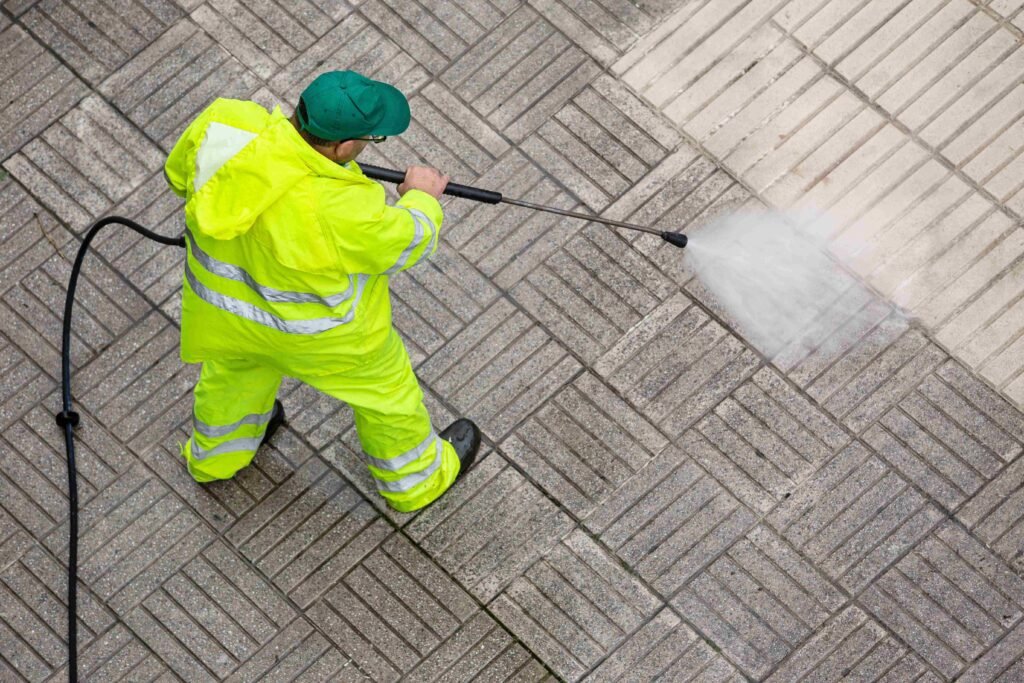
Professional paver pressure washing in Escondido can remove compatible surface dirt and buildup from driveways, patios, walkways, courtyards, entrances, and selected pool-area pavers.
However, effective paver cleaning is not simply a matter of applying maximum pressure. Excessive pressure may disturb joint sand, expose weak areas, or create an inconsistent appearance. The cleaning method should be adjusted according to the paver material, surface condition, stain type, joints, drainage, and surrounding property features.
Our professional paver cleaning service may help remove or reduce:
Some deeply absorbed stains, faded areas, mineral deposits, efflorescence, paint, rust, or existing coating damage may remain visible after cleaning. These conditions are assessed separately from normal surface dirt.
For complete exterior-surface care, visit our pressure washing services in Escondido page.
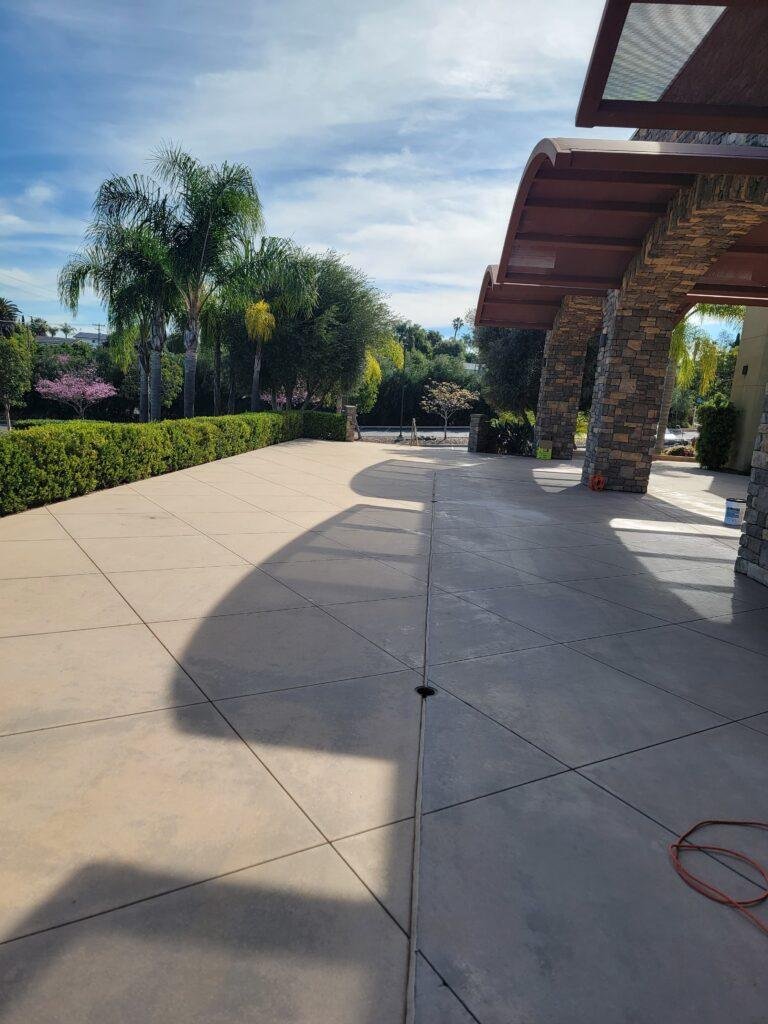
Different paver materials respond differently to water pressure, cleaning solutions, moisture, and sealing products. We assess the material before selecting a cleaning method.
Compatible surfaces may include:
Material identification is particularly important when sealing is requested. A product suitable for concrete pavers may not be appropriate for clay, natural stone, porcelain, or a previously coated surface.
Paver cleaning and sealing are related, but they perform different functions. Your estimate should clearly identify whether the project includes paver cleaning only or both cleaning and sealing.
Our pressure-washing-led cleaning process may include:
Cleaning can improve the appearance of compatible paved surfaces. It cannot replace lost color, level sunken pavers, correct drainage, repair cracks, or resolve an unstable paver base.
Paver sealing involves applying a compatible product after the surface has been cleaned, prepared, and allowed to dry.
Depending on the material and selected product, sealing may:
Sealing does not make pavers maintenance-free or completely stain-proof. It also cannot repair cracked, loose, uneven, or poorly installed pavers.
Cleaning and surface preparation are essential before sealing. Applying a sealer over dirty, contaminated, or damp pavers may trap visible buildup or moisture and affect adhesion, appearance, and finish consistency.
Before sealing is considered, we evaluate the surface for:
Paver pressure washing also helps reveal surface problems that may have been hidden beneath the buildup. Any remaining stains, damaged joints, failed coatings, or other limitations can then be discussed before sealing proceeds.
An existing coating can affect the cleaning method and determine whether a new sealer can be applied.
Signs of an old, incompatible, or failing sealer may include:
Standard pressure washing may remove loose sections of a failing coating, but it is not a complete sealer-stripping service. If specialized coating removal is required, it must be assessed and listed separately in the approved estimate.
Applying a new product over an incompatible or failing coating may produce an uneven result. This is why existing-sealer identification is an important part of the service assessment.
Joint sand fills the spaces between many interlocking pavers. Some joint sand may be displaced during pressure washing, especially when the joints are already shallow, loose, deteriorated, or affected by runoff.
Before and after cleaning, we may assess:
When re-sanding is available, suitable, and included in the estimate, compatible jointing material may be added after cleaning. Re-sanding is not automatically included in every paver-cleaning service.
Cleaning or re-sanding cannot correct a failed base, significant paver movement, structural defects, or major drainage problems.
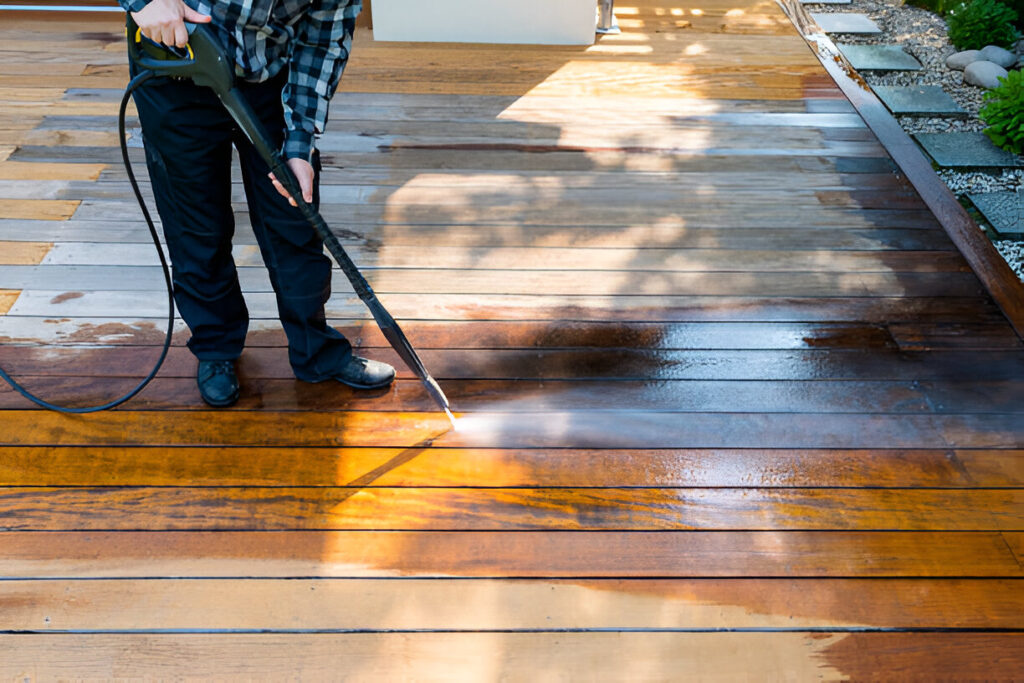
Pressure washing remains the central stage of our service. Sealing and re-sanding are added only when suitable and included in the approved project scope.
We inspect the material, surface condition, stains, joints, drainage, surrounding landscaping, accessibility, and existing coatings.
Oil, rust, efflorescence, organic buildup, irrigation residue, and old coatings are reviewed to establish realistic cleaning expectations.
Controlled pressure cleaning should not be confused with applying unrestricted high pressure to every roof.
Vehicles, furniture, planters, mats, toys, and portable decorations should be removed. Nearby walls, doors, plants, drains, painted surfaces, and artificial turf are considered before work begins.
Compatible cleaning treatments and adjusted pressure are used according to the paver material and condition. The objective is to remove suitable buildup without using unnecessary force.
The surface is thoroughly rinsed and inspected. Remaining stains, damaged pavers, existing coating problems, and joint conditions are identified.
After cleaning, we check for shallow joints, displaced sand, visible movement, and other limitations that may affect the next stage.
If required, compatible, and listed in the approved estimate, suitable jointing material may be added according to the agreed project scope.
Pavers must be sufficiently dry before sealing. Drying depends on temperature, humidity, shade, porosity, drainage, recent irrigation, and manufacturer requirements.
When sealing is included, a compatible product is applied according to the paver material, surface condition, selected finish, and manufacturer instructions.
Driveway pavers can collect vehicle residue, tire marks, soil, oil, irrigation deposits, and general traffic buildup. Our driveway paver cleaning process uses controlled pressure based on the surface condition.
Deeply absorbed automotive stains or physically damaged pavers may remain visible. Sealing may be considered after the driveway has been properly cleaned, assessed, and dried.
Patios and courtyards commonly collect landscaping debris, food marks, planter residue, organic buildup, and moisture-related discoloration.
Our patio paver cleaning method accounts for nearby doors, walls, furniture, plants, and drainage. Compatible sealing can be discussed when a cleaner, easier-to-maintain finish is desired.
Walkways and entrances often receive concentrated foot traffic, soil, and landscaping debris. Loose or sunken pavers should be identified because pressure washing will not correct trip hazards or structural movement.
Pool surroundings require additional attention to surface traction, drainage, frequent water exposure, and chemical compatibility. Not every sealer is appropriate for pool-area pavers or other regularly wet surfaces.
Paved surfaces in Escondido can accumulate dry-weather dust, landscaping debris, irrigation residue, automotive deposits, and organic buildup in shaded or damp areas.
Cleaning requirements can vary between:
During the assessment, we consider sun exposure, shade, irrigation patterns, drainage, traffic, nearby landscaping, previous cleaning, and existing sealer condition. These attributes help determine the appropriate paver-cleaning method and whether sealing should be considered.
Professional pressure washing can improve many forms of surface buildup, but it cannot correct every paver condition.
Limitations may include:
These conditions should be separated from removable surface dirt when the project scope and expected result are discussed.
Sealing may need to be postponed or excluded when:
Pavers should not automatically be sealed simply because they have been pressure washed. The material, surface preparation, moisture level, weather, and sealer must all be compatible.
Customers should follow the project-specific curing instructions provided after sealing.
Depending on the product and site conditions, aftercare may include:
Sealing does not eliminate routine paver maintenance. Sun exposure, traffic, irrigation, moisture, landscaping, and future cleaning methods can affect the finish over time.
The cost of paver cleaning and sealing services in Escondido depends on the surface condition, size, access, preparation, and services included.
Important pricing factors include:
A cleaning-only project has a different scope from cleaning and sealing or a complete clean, sand, and seal service. The estimate should clearly explain which stages, products, and preparation services are included.
Photographs may help with an initial review, but an on-site assessment may be required before the method and final price are confirmed.
A1A Supreme Cleaning is an exterior-cleaning and pressure-washing company. Our paver service is built around controlled cleaning—not paving installation or structural construction.
Customers choose us for:
We do not present cleaning or sealing as a substitute for paver replacement, structural repair, levelling, base correction, or drainage work.
If your driveway, patio, walkway, courtyard, entrance, or compatible pool-area pavers have accumulated dirt, organic buildup, traffic residue, irrigation marks, or general surface grime, contact A1A Supreme Cleaning.
When requesting an estimate, please provide:
Our paver cleaning and sealing services in Escondido begin with professional pressure washing and can include compatible sealing when appropriate for the surface and approved scope.
Many compatible pavers can be pressure washed using a method adjusted to the surface material and condition. Excessive pressure can disturb joint sand or affect vulnerable areas, so the pavers should be assessed first.
Not always. Sealing depends on the paver material, existing coating, moisture, surface condition, intended finish, and product compatibility. The surface must be properly prepared and sufficiently dry.
Pricing depends on the surface area, material, existing coating, stain level, joint condition, required sand, sealer, number of coats, access, and preparation. A property-specific estimate is required.
Pressure washing may remove loose or failing portions of an existing coating, but it is not a complete sealer-stripping method. Specialized preparation may be required before a new coating can be applied.
Some joint sand may be displaced, particularly when joints are already shallow, loose, or deteriorated. Joint condition should be checked after cleaning, and any required re-sanding should be confirmed separately.
Sealing may help support compatible jointing material, but it cannot guarantee permanent weed prevention. Weed growth is also influenced by moisture, drainage, airborne seeds, joint condition, and installation quality.
Traction depends on the paver material, texture, selected product, finish, application, and water exposure. Pool areas, slopes, steps, and frequently wet surfaces require additional assessment.
Sealing over unresolved efflorescence may trap or emphasize the deposit. The condition should be assessed and compatible preparation completed before sealing is considered.
Curing time depends on the product, surface, weather, and application conditions. Follow the project-specific instructions before allowing people, vehicles, furniture, irrigation, or water onto the sealed area.
There is no single schedule for every property. Traffic, sun exposure, irrigation, drainage, paver material, existing sealer, and maintenance determine when another cleaning or sealing assessment may be appropriate.
A1A focuses on paver pressure washing, surface cleaning, preparation, joint assessment, and compatible sealing. Installation, structural repair, levelling, base correction, and drainage work are separate services.